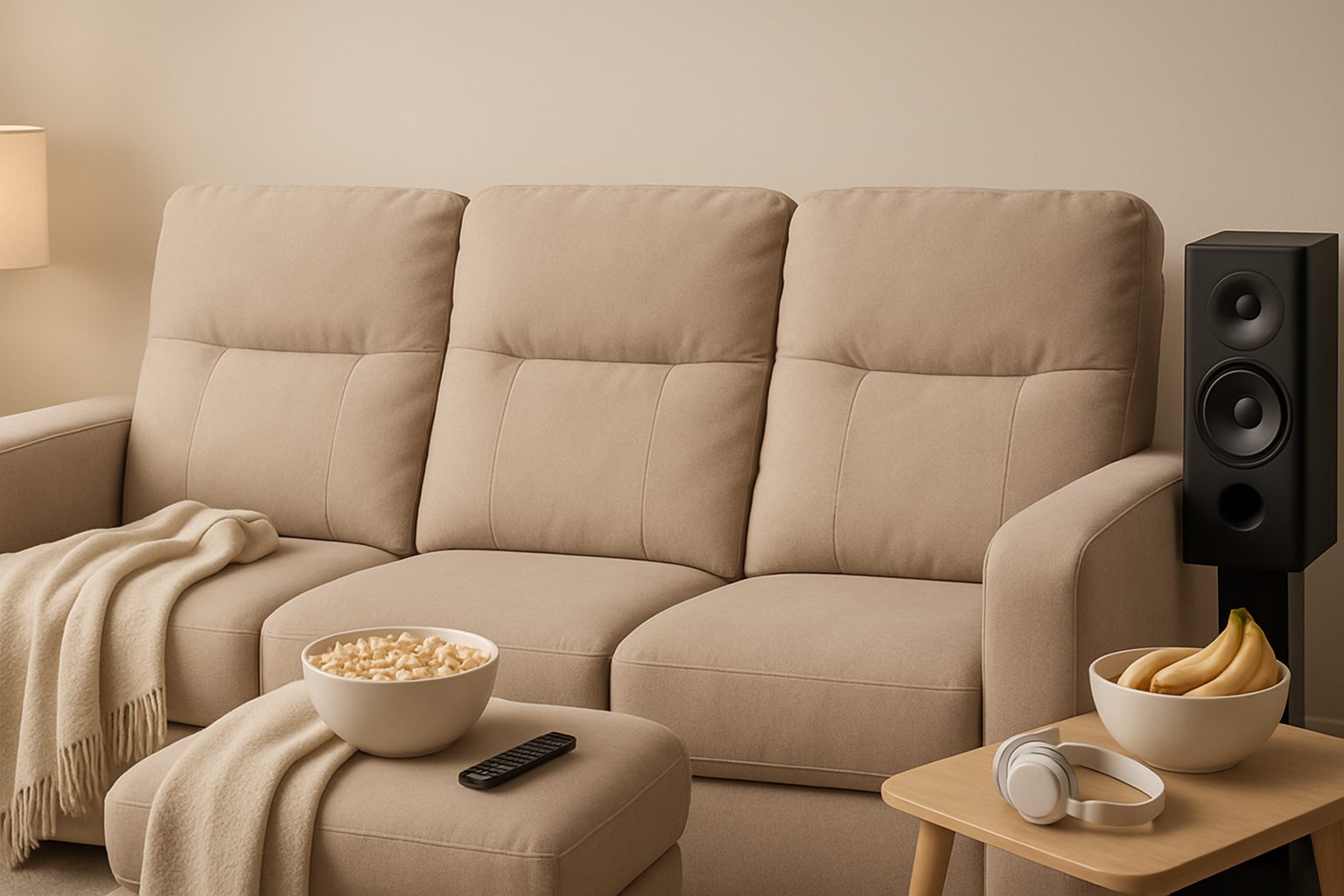
Best Home Cinema Recliner Chairs UK 2025: Tested & Ranked
A decent recliner transforms a living room into a proper home cinema. You'll spend hours in it, so comfort matters more than you'd think. The difference between a chair that supports your back for a whole film and one that leaves you aching becomes obvious after the first 90 minutes.
Finding the right one means balancing recline angle, lumbar support, and whether you want manual or electric operation. Most people overlook build quality until the mechanism starts creaking after a year.
Manual vs. Powered Recliners
Manual recliners use a lever mechanism on the side or foot pedals underneath. They're mechanically simpler, which means fewer things break. You're also not paying for a motor, so the upholstery and frame budget tend to be better. The trade-off is obvious: reclining requires effort, and if you've got mobility issues, it becomes tedious.
Powered recliners have an electric motor that reclines the backrest and lifts the footrest. You control them with a remote or wall-mounted button. They're more convenient, especially if you're adjusting position throughout a film or dealing with arthritis. The downside is that motors eventually fail—usually after five to seven years of regular use—and replacement costs between £300 and £600. They're also heavier and harder to move.
For most people watching films several times weekly, a quality powered recliner justifies the extra expense.
Build Quality Matters More Than You'd Expect
The frame is where cheap recliners fall apart. Look for hardwood or high-grade plywood bases, not particleboard. A solid frame lasts 10+ years; a weak one starts wobbling within two.
Check the mechanism. Smooth reclining suggests well-engineered linkages and quality hinges. If it's jerky or sticks at certain angles, the tolerances are poor. This usually gets worse, not better.
Upholstery choice affects durability significantly. Genuine leather hides imperfections and cleans easily but costs more. Microfibre fabrics are hard-wearing and stain-resistant, making them practical for households with kids or pets. Bonded leather (cheap leather scraps glued to fabric) peels after a few years—avoid it.
Lumbar Support and Reclining Angles
Most decent home cinema recliners recline between 130 and 160 degrees. Full-flat options exist but add cost and take up more space when extended. For film watching, 150 degrees is usually sufficient—it gets your legs elevated and back nearly horizontal without the bulk of a bed-style recliner.
Lumbar support is where brands differ most. Budget models have thin cushioning that compresses flat within months. Mid-range chairs include a memory foam lumbar pillow, which helps but isn't adjustable. Premium options have built-in lumbar adjustment or thick, high-density foam that maintains support over years.
If you're tall (over 6 feet), confirm seat depth and headrest height. A short seat forces your legs to dangle, which defeats the comfort advantage. Headrest position matters less than people assume—you'll naturally shift to find what's comfortable—but having a proper headrest beats slumping back without one.
Size and Space
Recliners take up more room than sofas. In extended position, they typically need 60–80cm clearance from the back wall. Measure your space carefully, especially if you're squeezing one into a smaller room. Width varies from 75cm (single, narrow frames) to 95cm (full loungers). Depth when reclined ranges from 150cm to over 180cm.
Some models swivel, which adds flexibility and costs a bit more. Others are stationary or rock. Swivel is nice if you need to position the chair toward a different part of the room.
Practical Considerations
Cup holders and storage: Useful features but only if well-designed. Badly positioned cup holders spill drinks on your lap; flimsy storage compartments don't hold much. Don't prioritize these over core comfort.
Heating and massage: Built-in heating is convenient for winter viewing. Massage functions are a gimmick—they either vibrate pointlessly or cost hundreds extra for marginal benefit.
Noise: Electric motors are quieter than they used to be, but some still hum audibly. If you're sensitive to noise, test before buying.
Cleaning and maintenance: Fabric recliners are harder to keep pristine than you'd hope. Microfibre resists stains better than cotton blends. Leather cleans easily but requires occasional conditioning. Budget for professional cleaning every couple of years if you want it looking good long-term.
What Works for Home Cinema
For a dedicated home cinema setup, prioritise build quality and lumbar support over extra features. A powered recliner with genuine leather upholstery, memory foam lumbar support, and a full recline angle (145°+) costs between £800 and £1,400 for a single chair. That's worth it if you'll use it regularly for the next five years.
If you're on a tighter budget, a quality manual recliner (£400–£700) with solid hardwood framing and decent padding gives you 80% of the comfort for half the price. You sacrifice convenience, but the mechanics are simpler and less likely to fail.
Avoid anything under £300. Below that price point, the foam compresses quickly, the frame feels flimsy, and the recline mechanism will likely need repair within a year or two.
Get the chair delivered and assembled rather than attempting a DIY setup. Recliners are heavy and awkward, and assembly mistakes can affect how the mechanism works.
Test before buying if you can—sit in it for at least 10 minutes and try different recline positions. What's comfortable in a shop for five minutes might feel wrong once you've settled in for a two-hour film.
More options
- Home Cinema Recliner Chairs — Amazon UK (Amazon UK)
- Electric Power Recliner Sofa — Amazon UK (Amazon UK)
- Home Cinema Seating Row with Cup Holders — Amazon UK (Amazon UK)
- Leather Home Cinema Chair — Amazon UK (Amazon UK)
- Home Cinema Pod & Capsule Chair — Amazon UK (Amazon UK)