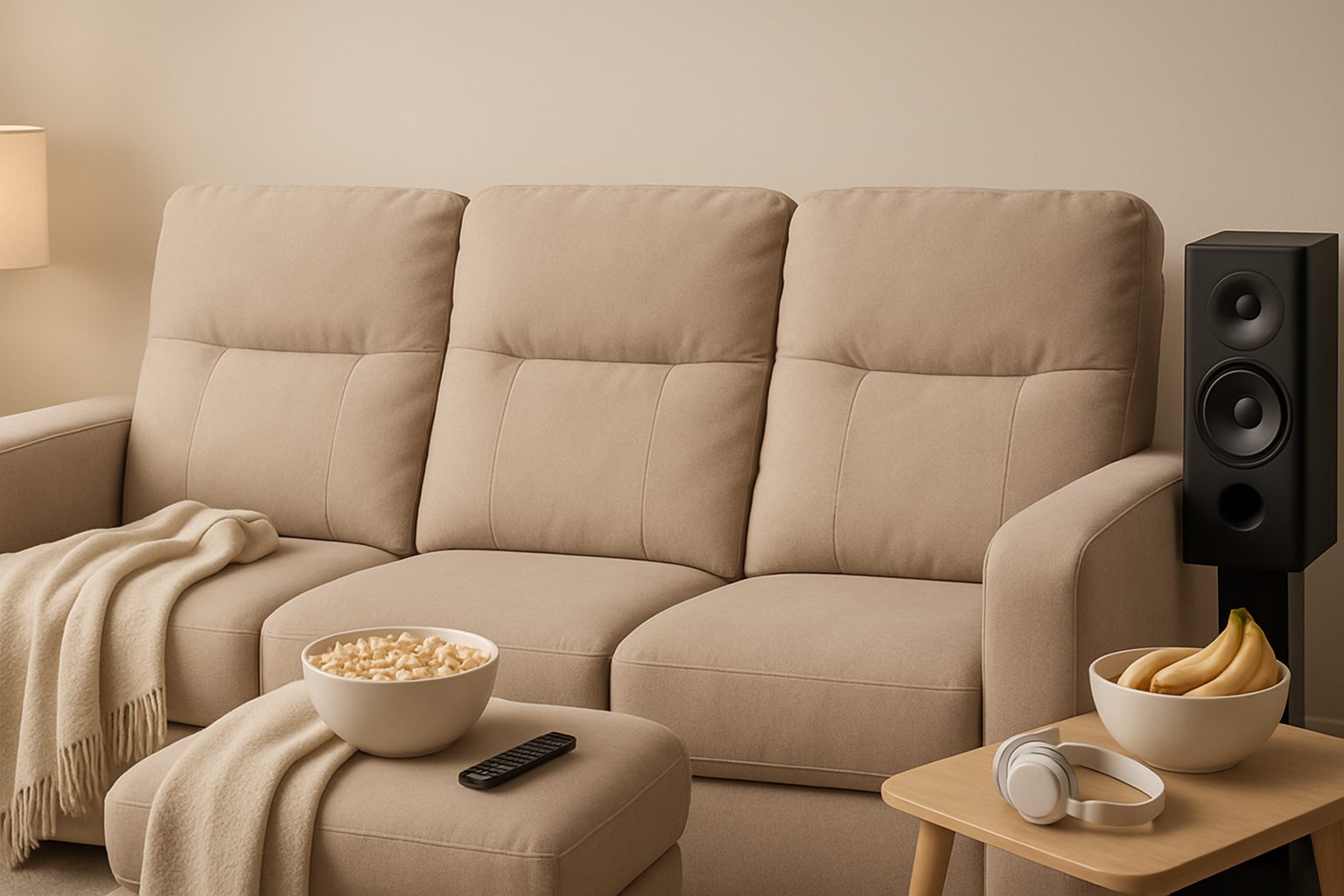
Best Home Cinema Seating for Small Rooms UK: Space-Saving Solutions
Small rooms don't mean compromising on comfort. If you've got a dedicated cinema space that's cramped for square footage, the right seating can transform a cramped viewing experience into a genuinely enjoyable one. The key is choosing chairs that prioritise depth efficiency without sacrificing the recline and support that make longer films bearable.
Why Standard Cinema Recliners Don't Work in Small Rooms
Most full-size home cinema recliners extend 90–100 cm when fully reclined. That's fine if you've got a room 4 metres deep, but brutal in anything smaller. You'll either leave them unreclined (defeating the purpose), squeeze them in and create an awkward traffic jam, or waste valuable viewing distance. The solution isn't to buy a smaller chair and compromise—it's to choose designs engineered for compact spaces from the start.
Wall-Hugger Recliners: The Best Compromise
Wall-hugger recliners are your most practical option for small rooms. They're engineered to move forward as they recline, rather than backward. A good wall-hugger extends only 60–70 cm from the wall when fully reclined, compared to 30–40 cm in the upright position. That's genuinely useful in rooms where every centimetre counts.
Minimum room depth: 3.5–4 metres (depending on the specific model and your viewing distance preference). Measure from the back wall where the chair will sit to the opposite wall or screen.
These chairs maintain the full recline angle and footrest extension of standard models. You're not losing comfort—you're just not wasting floor space. Most wall-huggers in the UK market use a power mechanism (usually mains-powered with a remote) rather than manual operation. Check the upholstery before buying; leather and faux-suede clean far easier than fabric if you've got kids or pets.
Compact Loveseats: Seating Two Without Sprawl
A two-seater compact loveseat typically measures 140–160 cm wide and 75–80 cm deep. That's narrow enough for modest rooms while still giving two people a genuine cinema experience rather than squashed quarters.
Minimum room depth: 3.5–4 metres.
The trade-off is obvious: you've only got space for two people. Many compact loveseats recline via manual levers (rather than power), which keeps the price down and eliminates mains dependency. Some premium models offer one or both seats as power recliners. Test the manual mechanism in person if you can—cheap levers feel stiff and quickly become annoying.
The arms on compact loveseats are often narrower too, which can feel cramped if you like armrest space. That's the real compromise here, not the recline quality.
Pod Chairs and Egg Chairs: Stylish but Niche
Single-seat cinema pods and egg chairs under 80 cm depth exist and look striking, but they're more design statement than practical seating solution. Most are stationary (non-reclining) and quite pricey for what you're getting. They work well if you're furnishing a genuinely tiny room (under 3 metres depth) or adding a bonus seat in a corner.
Minimum room depth: 3–3.5 metres.
They're popular in luxury home cinema builds, but they're not cost-effective for a primary seating solution. If you're drawn to the aesthetic, treat them as a second-room option.
Considering Your Actual Room Dimensions
Before buying, measure three things:
- Wall-to-wall depth where seating will live. Don't estimate.
- The distance you want between the back of the chair and your screen. Standard cinema viewing is roughly 1.5 times the screen height; cramped viewing is more like 1.2 times. A 55" screen needs about 2.4 metres to 3 metres of viewing distance.
- Door and passage widths. A 70 cm deep recliner won't fit through a 60 cm doorway. This catches people out.
If your room is under 3.5 metres deep, a wall-hugger is your best option. Below 3 metres, consider whether a compact loveseat or single power recliner is more practical than trying to squeeze two standard chairs in.
Materials and Durability
In small rooms, every seat gets heavier use because you're viewing more frequently in a smaller space. Leather and faux-suede hold up best. Real leather breathes better and lasts longer, but faux-suede is cheaper, easier to clean, and nearly as durable in UK homes (where humidity is the main concern, not heat). Avoid cheap fabric unless your room stays very clean—once stained, compact seating is hard to deep-clean properly.
Power mechanisms are worth the extra cost in small rooms. You'll use the recline feature more often since you're settled in for longer, and manual levers take up arm space you can't afford to lose.
Final Thoughts
Small-room cinema seating succeeds when you stop thinking of it as a compromise and start designing around your space's actual limitations. Wall-huggers solve the depth problem elegantly. Compact loveseats work if two viewers is enough. Pod chairs fill a niche but rarely justify their cost as primary seating.
Visit showrooms before ordering online—sit in the chairs, test the recline mechanism, and actually measure how far they extend. What works for someone else's 4-metre room might not work for yours, and returns on large furniture are expensive and frustrating.
More options
- Home Cinema Recliner Chairs — Amazon UK (Amazon UK)
- Electric Power Recliner Sofa — Amazon UK (Amazon UK)
- Home Cinema Seating Row with Cup Holders — Amazon UK (Amazon UK)
- Leather Home Cinema Chair — Amazon UK (Amazon UK)
- Home Cinema Pod & Capsule Chair — Amazon UK (Amazon UK)