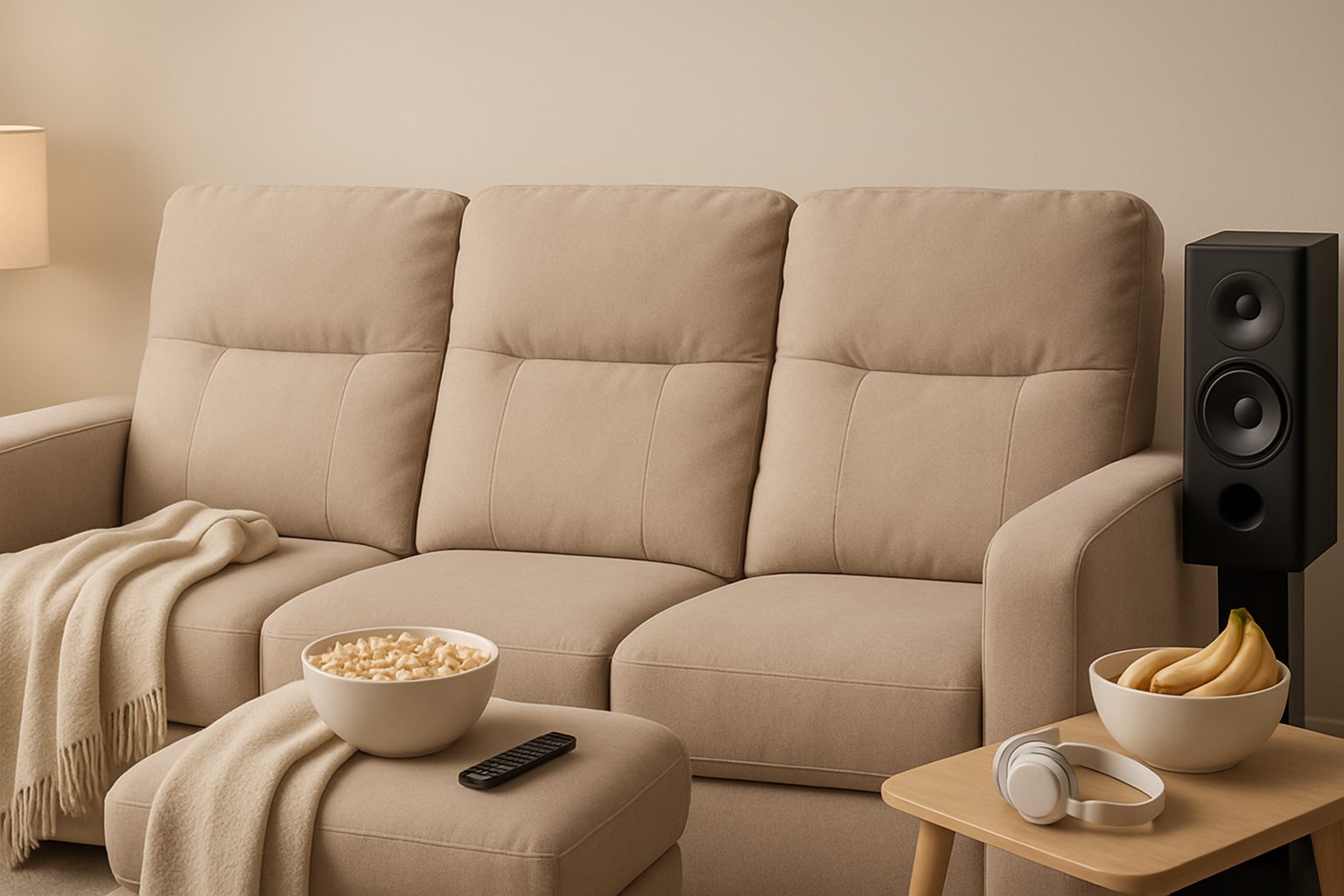
Leather vs Fabric Home Theatre Seating: Which Should You Choose?
Choosing between leather and fabric for your home theatre seating is one of the bigger decisions you'll make when setting up a cinema room. Both materials have genuine strengths and real drawbacks, and the right choice depends entirely on how you'll actually use your space, how much upkeep you're willing to do, and what matters most to your comfort during long film marathons.
Comfort: First Impressions vs. Long-Term Feel
Leather seats feel luxurious the moment you sink into them. They're smooth, supportive, and they conform gradually to your body shape over time. However, leather has a significant comfort quirk: it retains and conducts heat. In a warm lounge or during summer, leather can feel uncomfortably warm against bare skin or light clothing, and it'll stick slightly to your legs after a couple of hours. You'll often find yourself shifting position just to find a cooler spot.
Fabric seats—particularly microsuede or chenille blends—feel softer and warmer to the touch immediately. They're breathable, so they won't trap heat, and many people find them more forgiving for back support during extended viewing sessions. The trade-off is that fabric can feel less "cinematic" if that luxury feel matters to you, though higher-end fabric theatre seats challenge this perception entirely.
For truly comfortable home theatre seating in the UK climate, fabric generally has the edge for everyday comfort, especially if your cinema room doesn't have excellent climate control.
Durability: How Long Will Your Investment Last?
Leather, when cared for properly, lasts substantially longer than fabric. Genuine leather develops character with age, resists staining better, and can often be professionally restored if it becomes damaged. A quality leather theatre seat can reasonably last 10-15 years of regular use before showing serious wear. The catch: leather requires regular conditioning (typically every 6-12 months) to prevent cracking and drying, particularly in dry centrally-heated homes common across the UK.
Fabric seats typically have a lifespan of 5-10 years depending on quality and usage. The weave gradually loosens, seams can fray, and high-wear areas (armrests, seat edges) show visible pilling or thinning. Premium performance fabrics with tight weaves last longer, but they'll still need eventual replacement sooner than leather. However, some fabric theatre seats come with removable, washable covers—a genuine advantage for long-term maintenance.
For durability alone, leather wins. For durability without ongoing maintenance effort, fabric performs better relative to the work required.
Heat Retention: A Real Consideration
This is where the materials differ most noticeably in daily use. Leather conducts heat from your body and the room, so on warm days or in a poorly ventilated cinema room, you'll feel uncomfortably hot within 30-45 minutes. Some premium leather theatre seats now include gel-infused foams designed to counteract this, but these cost significantly more.
Fabric breathes naturally. Air circulates through the weave, so you stay closer to a neutral temperature. If your theatre room is warm, fabric seating won't amplify the discomfort. If your room is cool, both materials feel comparable.
Unless your cinema room has active cooling or you live somewhere consistently cold, fabric has a real comfort advantage here.
Cleaning and Maintenance: Effort and Cost
Leather requires proactive care. Spilled drinks, food residue, or dust need prompt wiping with appropriate leather cleaner—not harsh detergents. Once a year, you'll need to condition the leather to maintain suppleness and water resistance. Professional cleaning runs £40-80 per seat if stains become stubborn.
Fabric needs different tactics. Small spills should be blotted immediately, and stains often require spot-cleaning with upholstery cleaner and a stiff brush. Some high-end fabrics resist staining through protective treatments, but these wear away over time. The advantage: if your theatre seat has removable covers, you can occasionally machine-wash them, which leather cannot tolerate.
For someone who wants minimal maintenance, leather wins—you're mostly just wiping and conditioning. For someone who's already got a busy schedule, fabric's lower barrier to quick, casual cleaning is genuinely appealing.
Cost Considerations Over Time
Leather theatre seats cost more upfront—typically 20-30% more than equivalent fabric models. Then factor in conditioning (around £8-15 per litre, and you use very little, but it's an ongoing cost) and occasional professional cleaning.
Fabric seats cost less initially, but if you wear through the seat bottom or armrests after 6-7 years, your options are limited: recover the seat (£150-300 per seat) or replace it. Some people simply accept this as normal furniture replacement, just as they would with a standard sofa.
Over a 10-year period, a leather seat might cost slightly more in total maintenance, but you'll still have usable furniture. A fabric seat might be ready for recovery or replacement.
Making Your Decision
Choose leather if you want seats that'll look impressive long-term, you're willing to do basic conditioning maintenance, your theatre room has decent temperature control, and you want to keep the same seating for a decade or more.
Choose fabric if you prioritise immediate comfort, hate the feel of hot seating, want minimal upkeep, or you'd rather replace your theatre seating every 7-8 years anyway as part of a refresh.
Many people find that a hybrid approach works: leather seat bases for durability, fabric cushioning for comfort. Check product specifications carefully to see if manufacturers offer this combination. If you're still deliberating, reading through detailed roundups of both leather and fabric theatre seat options can help you see real products side-by-side and read owner experiences. Your choice ultimately depends on what trade-off feels right for your space and how you actually use your cinema room day-to-day.
More options
- Home Cinema Recliner Chairs — Amazon UK (Amazon UK)
- Electric Power Recliner Sofa — Amazon UK (Amazon UK)
- Home Cinema Seating Row with Cup Holders — Amazon UK (Amazon UK)
- Leather Home Cinema Chair — Amazon UK (Amazon UK)
- Home Cinema Pod & Capsule Chair — Amazon UK (Amazon UK)